


Every week, local business owners sit in our Naples office trying to decipher aggressive IRS collection letters.
Managing a tax lien levy wage garnishment situation can be incredibly confusing. The terminology often sounds identical, but the legal reality is completely different.
A lien protects the government’s interest, while a levy or garnishment actually drains your operating capital.
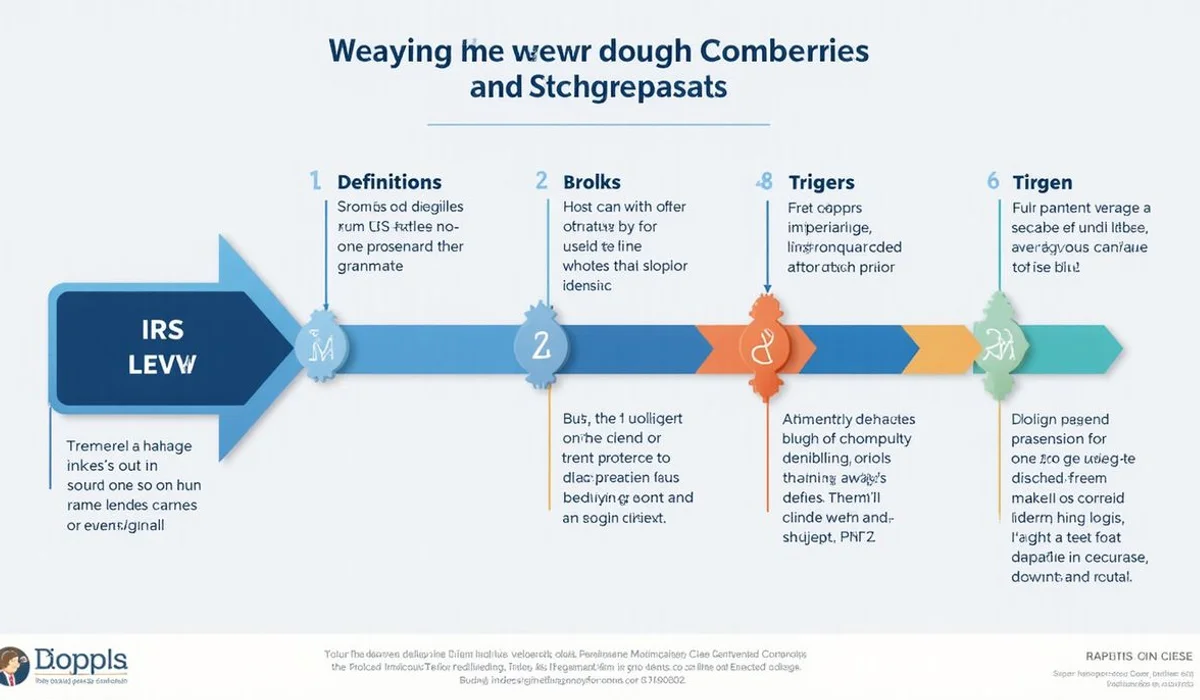
We approach each of these threats with a distinct, targeted defense strategy. Let’s define exactly what each of these enforcement tools does and map out the specific legal steps required to stop them.
Tax lien
A federal tax lien is a formal legal claim against your property. The IRS automatically files a Notice of Federal Tax Lien in public county records once your assessed, unpaid tax balance hits the $10,000 threshold. This filing occurs if you ignore their initial CP14 and CP501 demand notices.
Our tax resolution team sees these public records completely derail equipment financing and real estate closings across Southwest Florida.
| Feature | What a Tax Lien Does | What a Tax Lien Does NOT Do |
|---|---|---|
| Property | Attaches a claim to all real estate, vehicles, and business assets. | Physically seize or remove any of your property. |
| Visibility | Becomes a permanent public record visible to lenders and credit bureaus. | Notify your employer or directly garnish your wages. |
| Impact | Severely damages credit scores and halts refinancing efforts. | Empty your business bank accounts (that requires a levy). |
| Duration | Survives most bankruptcies specifically regarding tax debt. | Resolve the underlying tax debt automatically. |
How to remove a tax lien
Getting an official IRS tax lien release usually happens within 30 days of the debt being satisfied. Paying the full tax balance is the most direct approach.
We frequently deploy alternative strategies when a client cannot pay the full amount immediately.
- Withdrawal (Form 12277): Removes the lien from public records completely. The IRS often grants this if the lien was filed prematurely or if you enter a Direct Debit Installment Agreement.
- Subordination: Leaves the lien in place but allows a new lender to take priority. This step is essential if you need to refinance a mortgage to pay the tax debt.
- Offer in Compromise: Filing an OIC requires a $205 application fee in 2026. The IRS releases the lien entirely once the terms of an accepted settlement are satisfied.
Tax levy
A levy is the actual, physical seizure of your property. The IRS uses this aggressive escalation to take funds or assets directly to satisfy the debt. They typically issue Form 668-A to third parties, like your local bank or merchant processor, holding your money.
Our firm steps in rapidly because levies can drain an operating account overnight.
Common forms of IRS levies
- Bank account levy: The IRS freezes funds in your account. The bank holds the money for 21 days before sending it to the Treasury, giving you a brief window to act.
- Brokerage account levy: Investment and retirement accounts can be tapped to cover the balance.
- Receivables levy: The IRS sends notices to your customers instructing them to pay the IRS instead of your business.
- State refund levy: If you expect a state tax refund, the federal government can intercept it.
Triggers and stopping a levy
A levy generally follows a Final Notice of Intent to Levy, such as Letter 1058 or LT11. This specific notice gives you a strict 30-day window to request a Collection Due Process (CDP) hearing.
We immediately file this CDP request for clients because it legally forces the IRS to pause the levy action.
Other methods to stop a levy include negotiating a structured installment agreement or proving severe financial hardship. A successful hardship application places your account in Currently Not Collectible (CNC) status.
Wage garnishment
Wage garnishment is a specific type of continuous levy placed directly on your paycheck. The IRS sends Form 668-W to your employer. Your employer is legally obligated to send a large portion of your earnings straight to the federal government.
Our Naples clients often find this the most devastating collection action because it shrinks take-home pay immediately.
How much the IRS can take
Commercial creditors are usually capped at taking 25% of your disposable income. The IRS does not use a percentage cap. They use Publication 1494 to determine a tiny exempt amount based on your filing status and dependents.
| Garnishment Type | Maximum Withholding Limit | Legal Requirement |
|---|---|---|
| Standard Commercial Creditor | Typically capped at 25% of disposable earnings. | Requires a formal court judgment. |
| IRS Wage Garnishment | Takes 100% of earnings above the small exempt amount. | No court order needed (Form 668-W). |
For the 2026 tax year, a single taxpayer with no dependents gets to keep only $668.26 bi-weekly. Every single dollar earned above that amount goes directly to the IRS. You have exactly three days to return the Statement of Dependents to your employer.
We remind clients constantly that missing this three-day deadline forces the IRS to calculate your exemption at zero.
How to stop IRS wage garnishment
- Installment agreement: Getting on an approved payment plan is the fastest way to force the IRS to issue a Release of Levy (Form 668-D).
- Currently Not Collectible (CNC): Demonstrating that paying the tax leaves you unable to afford basic living expenses pauses the garnishment.
- Offer in Compromise (OIC): Submitting a viable settlement offer pauses collection activities during the lengthy review period.
- Hardship release: The IRS will sometimes lift a garnishment early if you can prove it will cause an immediate emergency, like an eviction or utility shutoff.
Choosing between the two most common paths comes down to your finances — see our breakdown of an Offer in Compromise vs. an IRS installment agreement to weigh which one releases the levy fastest in your situation.
Why representation accelerates relief
Handling IRS collections alone means sitting on hold for hours and speaking to agents with limited authority. We use specialized Practitioner Priority Service (PPS) hotlines to bypass the general queues entirely.
This direct access allows professionals to secure resolutions in a fraction of the usual time. Connecting with the specific Revenue Officer assigned to your case changes the entire dynamic of the negotiation.
- Account transcripts: Securing your master file via Form 2848 shows exactly what is owed and what internal deadlines are rapidly approaching.
- Immediate contact: Reaching the Collection unit directly turns weeks of waiting into a matter of days.
- Emergency releases: Negotiating a rapid hardship release of a wage garnishment saves businesses when operations are severely threatened.
- Accurate filings: Submitting the correct forms for payment plans ensures the process moves forward without technical rejections.
Florida and Naples-specific notes
Florida offers some of the strongest debtor protections in the country. Article X, Section 4 of the Florida Constitution protects your homestead from most private judgments. The IRS is a major exception to this state rule.
We regularly remind clients that federal tax liens absolutely attach to a primary residence, even though physical seizure remains rare.
State and local tax enforcement
Florida has no state income tax, which effectively eliminates state wage levies. The Florida Department of Revenue (FDOR) aggressively enforces business taxes instead.
- Sales and Use Tax: FDOR can file a tax warrant within 20 days of a final assessment and freeze your bank accounts without a court order.
- Reemployment Tax: Misclassifying employees as independent contractors often triggers severe state audits and penalties for Naples contractors.
- Certificate Revocation: The state can revoke your sales tax certificate for non-payment, forcing a restaurant or retail shop to close its doors immediately.
- Federal Payroll Taxes: The IRS heavily uses the Trust Fund Recovery Penalty to make business owners personally liable for unpaid payroll taxes.
What to do right now
A Final Notice of Intent to Levy with a 30-day deadline is an absolute emergency. Book a consultation today and tell the staff exactly when that deadline expires.
We prioritize these urgent cases to protect your operating accounts before the government seizes them.
For any other collection letters, review our IRS Tax Resolution service details. The firm responds to active collection inquiries within the same business day.
Frequently Asked Questions
How do I stop an IRS wage garnishment?
Usually by getting into a payment arrangement, proving financial hardship (Currently Not Collectible status), or resolving the underlying balance through an Offer in Compromise. Garnishments can often be released within days of professional engagement under power of attorney.
What's the difference between a lien and a levy?
A lien is a claim — the IRS files a public Notice of Federal Tax Lien against your property. A levy is the actual seizure — taking funds from your bank account, paycheck, or other assets. Liens are warnings; levies are action.
Can the IRS take my house?
Technically yes, but in practice IRS seizure of a primary residence is rare and requires special approval. The IRS far more commonly levies bank accounts and wages. Florida's homestead protections also provide some protection against creditors generally.
Related service
Service
IRS Tax Resolution
Comprehensive IRS audit representation and back-tax resolution — we guide you through the entire inquiry with Florida-specific risk mitigation.
Related guides
How to Handle Unfiled Back Taxes
Behind on multiple years of returns? How to get compliant, what substitute returns are, statute-of-limitations basics, and the path to resolution.
What to Do When You Receive an IRS Audit Letter (CP2000)
Just received an IRS CP2000 or audit letter? First-response steps, what it means, your deadline to respond, and when to bring in representation.
IRS Penalty Abatement: How to Remove Tax Penalties
How to reduce or remove IRS penalties — first-time abatement, reasonable-cause criteria, which penalties qualify, and how the request works.
Offer in Compromise vs. IRS Installment Agreement
Offer in Compromise vs. an IRS installment agreement — eligibility, pros and cons, typical outcomes, and which back-tax path fits your situation.
Need help with this in Naples?
Book a free discovery call. We'll review your situation, walk you through the options, and respond within 48 hours.
Book a Discovery Call